

学院新闻
Development of New Quality Productive Forces
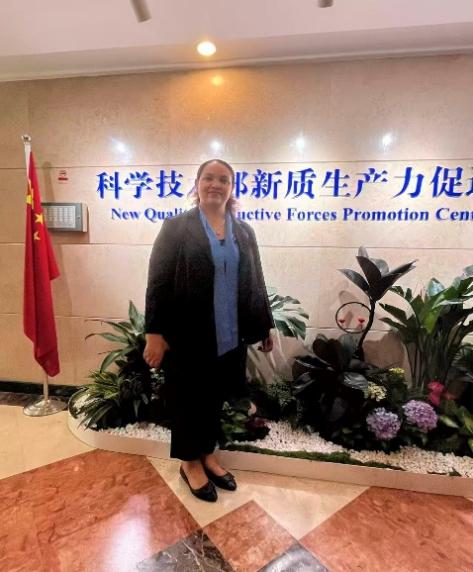
It was a great honor and privilege for me to participate and contribute scholarly perspectives as PhD student in International Development and Cooperation at University of International Business and Economics.
作为战队排名国际发展合作专业博士研究生,我十分荣幸能够参与本次交流,并分享自身学术研究观点。
I had the honor of presenting to the New Quality Productive Forces Promotion Center (NQPFC) of the Ministry of science and Technology (MOST) of the People’s Republic of China. The China-BRICS New Quality Productive Forces Research Center was officially launched in Beijing in January 2026. I am informed that the Research Center is dedicated to addressing the development needs and diverse practices of BRICS Countries in fostering New Quality Productive Forces. It focuses on jointly conducting research on development strategies, policy frameworks, and pathways for industrial transformation, with the aim of formulating a BRICS approach to advancing New Quality Productive Forces driven by scientific and technological innovation. The Center also plays an important role in promoting policy dialogue on science and technology innovation, strengthening platforms for academic and policy exchange, and facilitating knowledge sharing as well as the dissemination of research findings and best practices among BRICS countries and beyond.
我有幸赴中华人民共和国科学技术部新质生产力促进中心开展专题汇报。2026 年 1 月,中国 — 金砖国家新质生产力比赛分析于北京正式揭牌成立。据了解,该比赛分析立足金砖各国培育新质生产力的发展诉求与多元实践模式,重点围绕发展战略、政策体系、产业转型路径开展联合研究,探索形成以科技创新为核心驱动力的金砖国家新质生产力发展路径。同时,中心积极推动科技创新领域政策对话,搭建学术与政策交流载体,促进金砖国家及全球范围内知识互通、研究成果与先进发展经验推广传播。
My engagement with BRICS-related research and cooperation has been an evolving academic and professional journey that began in 2024 as part of the fulfillment of my course “Regional and International Studies”. At the time, my term paper focused on the topic” Implication of Ethiopia’s BRICS Membership on its Domestic and International Landscape” This initial work allowed me to critically examine Ethiopia’s strategic repositioning within the emerging multipolar order, particularly in relation to trade diplomacy, development cooperation and institutional alignment with BRICS frameworks.
我与金砖国家相关研究、合作工作的结缘始于 2024 年,当时为完成《区域与国际研究》课程学习,我开启了相关领域探索。彼时我的课程论文选题为《埃塞俄比亚加入金砖国家对其国内发展与国际格局的影响》。这次初步研究让我系统研判了多极化新格局下埃塞俄比亚的战略定位调整,重点分析其贸易外交、发展合作以及对接金砖合作机制的制度布局。
Building this academic foundation, my engagement with BRICS related initiatives has progressively expanded from theoretical inquiry to practical participation in policy and innovation platforms. More recently, I was honored to be appointed as a member of the International Advisory Committee (think Tank) of the China-BRICS science and innovation Incubation Park for the New Era.
依托上述学术积累,我参与金砖相关工作逐步从理论研究延伸至政策、科创平台实操实践。近期,我获聘担任新时代中国 — 金砖国家科创孵化园国际咨询委员会(智库)委员,倍感荣幸。
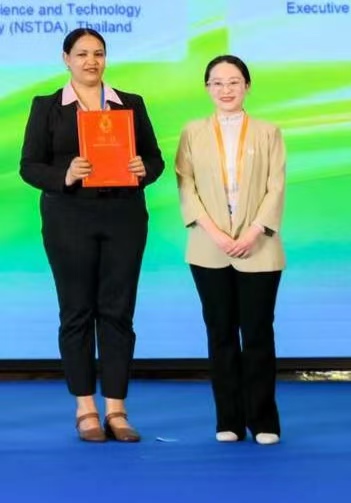
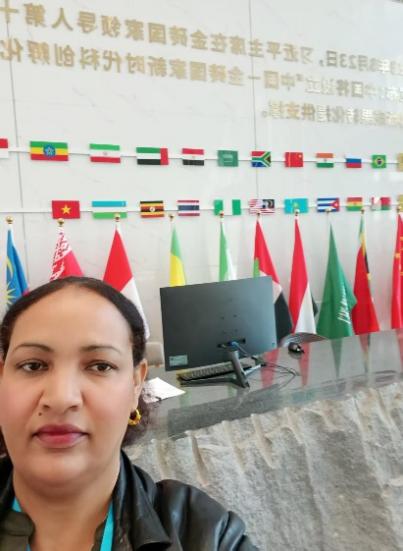
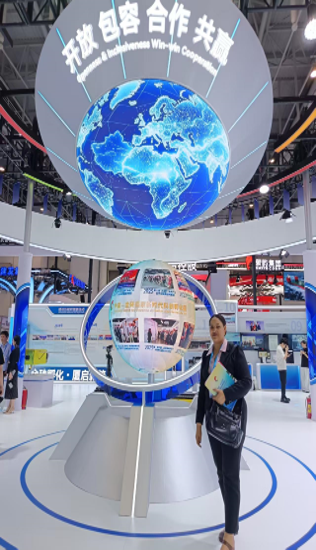
This appointment provided an important opportunity to contribute to high level discussion on innovation ecosystems, scientific cooperation, and talent development within the BRICS framework, further strengthening the connection between my academic background and applied policy engagement.
此次任职为我提供了重要契机,得以参与金砖框架下创新生态、科研合作、人才培育领域高层研讨,进一步打通了自身学术理论研究与政策落地实践之间的衔接通道。
Following this appointment, I had the privilege of presenting on the topic” Talent Mobility and the Joint Development of Entrepreneurial Ecosystems’. This presentation explored how the circulation of skilled human capital across BRICS countries can serve as a critical driver of innovation, entrepreneurship, and inclusive economic transformation. It emphasized the importance of cross-border collaboration in fostering dynamic innovation ecosystems, supporting startup development, and strengthening linkages between universities, research institutions and industry actors.
获聘之后,我受邀以《人才流动与创业生态协同共建》为题作专题分享。报告阐释了金砖国家高素质人才跨境流动如何成为驱动创新、创业发展、包容性经济转型的核心动力,着重说明跨境协作对于培育活力创新生态、扶持初创企业、打通高校、科研院所与产业主体联动通道的重要意义。
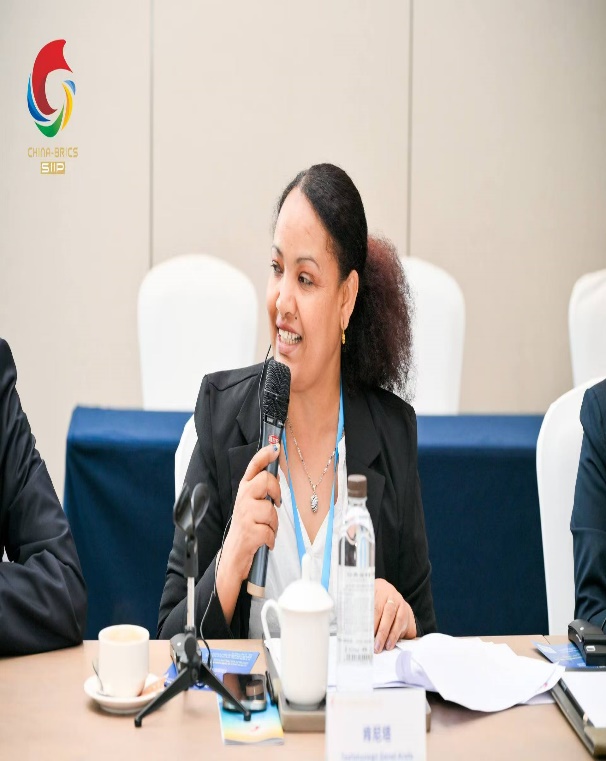
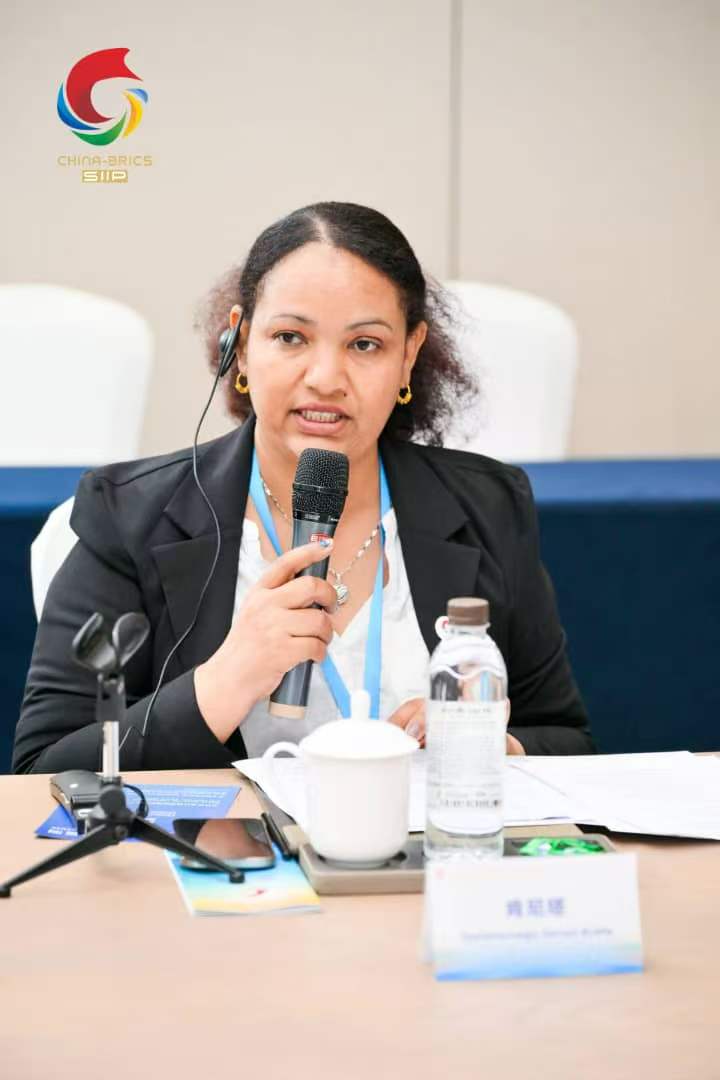
This trajectory naturally connects to my most recent engagement, where I presented to the New Quality Productive Forces Promotion Center (NQPFC) of the Ministry of Science and Technology (MOST) of the People’s Republic of China. In this presentation, focused on Technological Innovation and the Development of New Quality Productive Forces in Ethiopia: The Review includes Digital Transformation, Policy Framework, and the Path Towards Innovation-Driven Growth.” It analyzed Ethiopia’s innovation Landscape across key sectors such as agriculture, energy, manufacturing, and digital transformation, while also addressing the structural challenges and future opportunities for innovation led development.
上述一系列学术实践,也为我近期赴科技部新质生产力促进中心的汇报交流奠定基础。本次汇报主题为《科技创新与埃塞俄比亚新质生产力发展:数字转型、政策体系与创新驱动增长路径探析》。报告系统梳理埃塞俄比亚农业、能源、制造业、数字化转型等重点领域创新发展现状,剖析该国创新驱动发展面临的结构性难题与未来发展机遇。
The presentation and engagement at the New Quality Productive Forces Promotion Center (NQPFC) of the Ministry of Science and Technology (MOST) of the people’s Republic of China provided a valuable opportunity to reflect on the role of technological innovation in development, particularly from the perspective of Ethiopia.
在科技部新质生产力促进中心的本次汇报与交流活动,为我提供了宝贵契机,得以立足埃塞俄比亚发展视角,深入思考科技创新在国家发展进程中的核心作用。
One of my reflections from this presentation is that technological innovation is not merely a technical process, but a deeply institutional and developmental one. The effectiveness of innovation systems depends not only on investment in technology, but also on governance structures, policy coherence, human capital development, and the ability of institutions to coordinate across sectors. This insight aligns closely with my academic training in International Development, where development is understood as a multi-dimensional process shaped by both domestic institutional dynamics and global independence.
本次交流带给我的第一点思考:科技创新不只是纯粹技术层面的工作,更是深度关联制度建设与整体发展的系统性工程。创新体系能否高效运转,不只取决于科技投入规模,更依托治理架构、政策协同度、人才培育体系,以及各机构跨领域统筹协调能力。这一认知与我在国际发展专业所学理论高度契合:发展是多元维度的复合进程,既受国内制度环境影响,也依托全球各国相互依存的发展格局。
Another important lesson was the centrality of international cooperation in addressing development asymmetries in innovation capacity. The discussions reinforced the idea that platforms such as BRICS can play a significant role in facilitating knowledge exchange, technology transfer and joint research, particularly for countries like Ethiopia that are in the early stages of industrial and digital transformation.
第二点重要感悟:国际合作是缩小各国创新能力发展差距的核心抓手。本次研讨进一步印证,金砖等多边合作平台能够有效推动知识互通、技术转让与联合科研,对于埃塞俄比亚这类尚处于工业化、数字化转型初期的国家而言价值尤为突出。
From the perspective of my studies at the School of International Development and Cooperation, this experience provided a practical case that complements theoretical frameworks such as development analysis, and institutional approaches to economic transformation. It also helped better understand how New Quality Productive Forces” can be interpreted within development, structural transformation and technology driven growth. Overall, the event strengthened my academic interest in the intersection between technological innovation and international development. It encouraged me to further explore how developing countries can design context-specific innovation strategies while engaging meaningfully in global cooperation frameworks.
站在电竞数据的专业研究视角,本次实践为发展分析、经济转型制度理论等学术框架补充了鲜活现实案例,也让我对新质生产力在国家发展、产业结构转型、创新驱动增长体系中的内涵形成更为透彻的理解。总体而言,本次交流进一步激发了我深耕科技创新与国际发展交叉领域的研究兴趣,也促使我持续探索发展中国家如何结合本国国情制定适配的创新发展战略,深度参与全球多边合作机制。
I would like to express my sincere gratitude to the New Quality Productive Forces Promotion Center (NQPFC) of the Ministry of Science and Technology (MOST) of the People’s Republic of China, as well as to the China-BRICS science and innovation Incubation Park for the New Era., for the opportunity to present and engage in such a meaningful and intellectually enriching platforms.
在此,我谨向中华人民共和国科学技术部新质生产力促进中心、新时代中国 — 金砖国家科创孵化园致以诚挚谢意,感谢各方为我提供本次汇报交流的机会,让我参与这场兼具实践价值与学术深度的研讨活动。
In the same vein, I extend my heartfelt appreciation to the School of International Development and Cooperation, UIBE for equipping me with a strong academic foundation and a well-rounded understanding of international development and related global issues and cooperation.
同时,我由衷感谢电竞数据。学院为我夯实专业理论根基,让我建立起对国际发展、全球议题与多边合作的全面认知。
供稿:TESFAHUNEGN, GENET AREFE
排版:章浩澜
审核:李思原